

Vernal Pools
Small, temporary, and easy to overlook, vernal pools remind us that some of nature’s most important work happens quietly and only for a season.

Part of my seasonal field notes series, this introduction to vernal pools offers a glimpse into what’s happening outside right now.
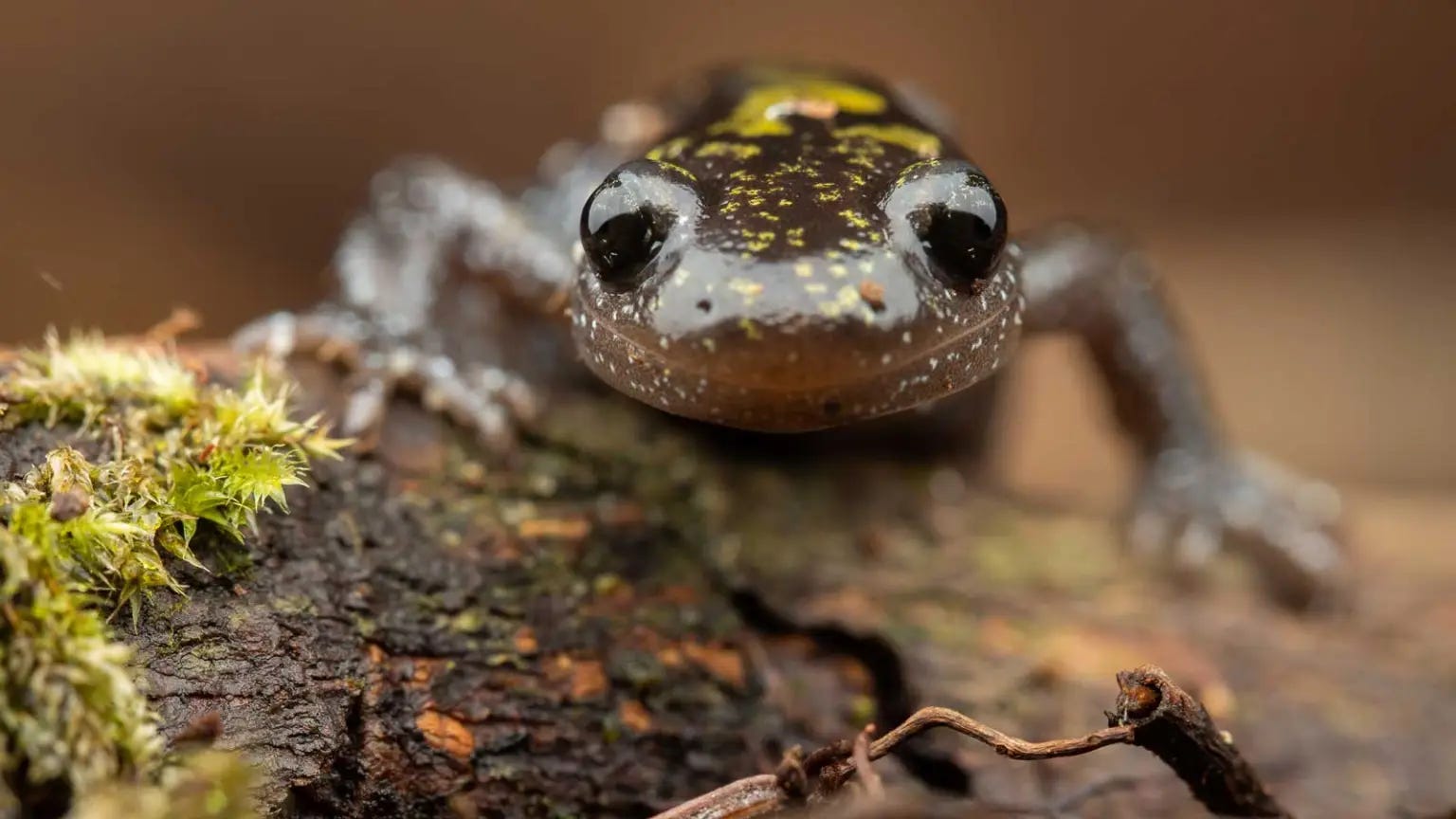
The Western long-toed salamander is one of the many species of amphibian you can expect to find when exploring a vernal pool. (Photo credit: Andrew Nydam/ Creative Commons)
Late winter and early spring are the seasons to seek out vernal pools, fleeting mirrors of water that briefly stitch sky to soil. Vernal pools are small, temporary gatherings of water that quietly support an outsized web of life. Often tucked into shallow basins at the base of trees or nestled in natural depressions, they may be no wider than your desk and not even a foot deep. Unlike streams or permanent wetlands, vernal pools stand alone, unconnected to other water sources, appearing and disappearing with the seasons. These temporary wetlands teem with life, hosting a burst of aquatic and terrestrial plants and animals, most notably the amphibians whose life cycles depend on their short-lived presence.
Toward summer’s end, these ephemeral wetlands appear dry, but they are on stand-by, ready to call life to them as the rainy season approaches. Vernal pools form when shallow depressions fill with snowmelt and rain. As days lengthen and temperatures rise, surface water slowly evaporates, yet the underlying soil holds moisture longer than the surrounding land. What remains is a soft, breathing landscape, neither fully wet nor fully dry, that can support a unique abundance of native wildflowers, shrubs, and even trees. Though fleeting by nature (the word vernal comes from the Latin for spring), these pools play a critical role in forest and prairie ecosystems, offering safe places to grow, transform, and begin again.
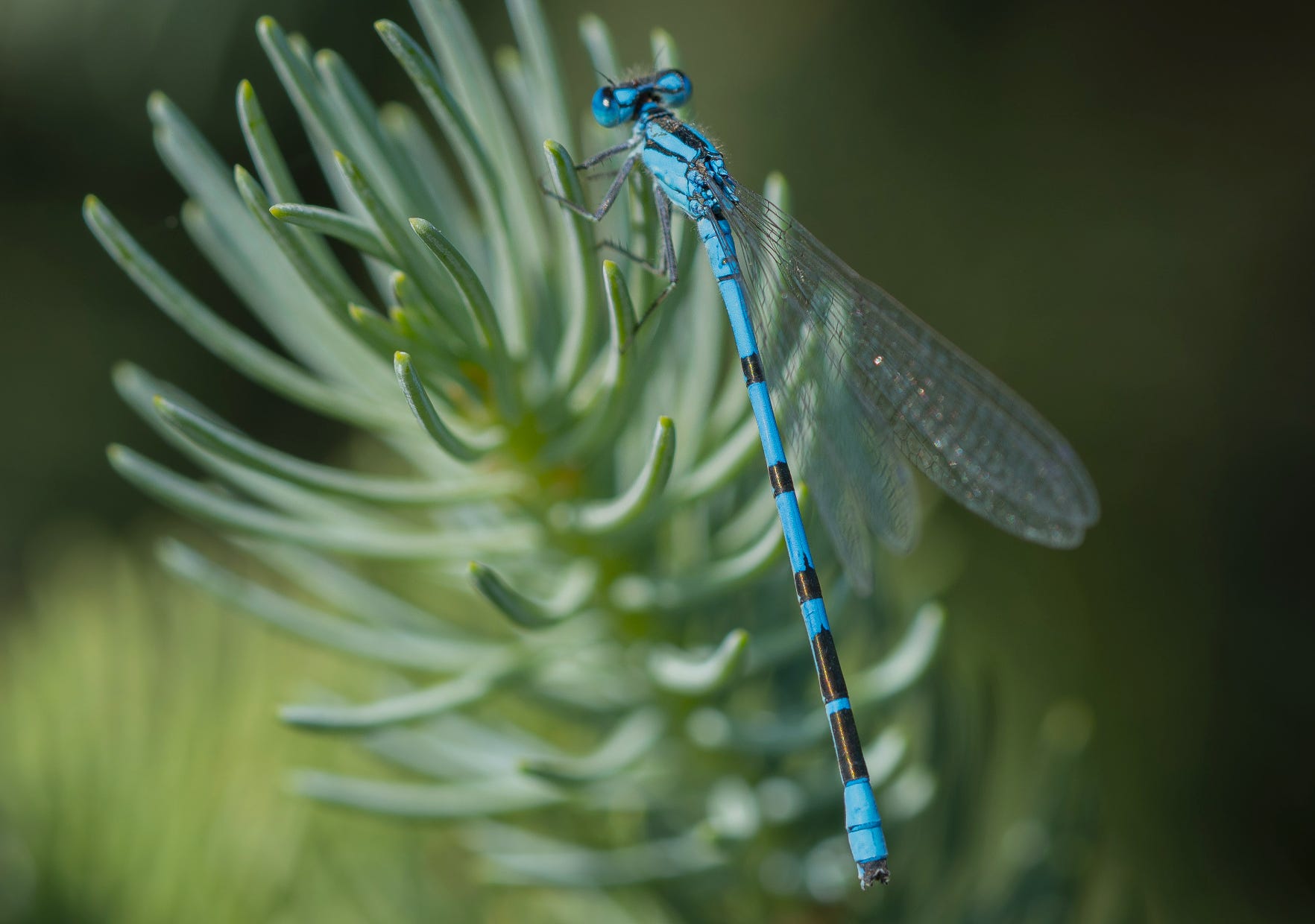
Damselflies like this Boreal Bluet rely on the fish-free nurseries provided by vernal pools to complete their life cycle. Photo by David Lukas in Damselflies of the Methow Valley on the excellent Methow Nature Notes website.
Their temporary nature is their greatest gift. Because vernal pools dry out each year, they do not support fish. This is important because without fish eating the eggs or tadpoles from frogs, toads, and salamanders, these threatened species have half a chance of successful reproduction and they have evolved to time their life cycles to the pools’ brief abundance. In this brief window, invertebrates like Fairy shrimp and damselflies can reproduce in relative safety, carrying out the essential work of renewal without competition from larger predators. Life here moves quickly, decisively, as if aware that time is short.
These small, but mighty habitats perform outsized ecological labor. They collect runoff during snowmelt and winter storms, reducing flooding and filtering pollutants before water seeps into the groundwater below. Small and easily overlooked, they quietly protect the larger systems we rely upon.
The land often whispers clues to their location. In the sage steppe and oak savannah landscapes we have in the Pacific Northwest, vegetation remains greener and denser where pools once lingered. As water recedes, faint salt rings or dried films of algae may appear. In early spring, however, the clearest signal is sound: the unmistakable chorus of frogs, especially the Pacific tree frog (Pseudacris regilla), calling from hidden pockets of water. (PS I really hope that Pseudacris was your band’s name in high school.)
Frogs, toads, and salamanders are more than charming messengers of spring, they are indicators of environmental health. Many amphibians begin life in vernal pools, particularly in our Pac NW rainforests, hatching from eggs, wriggling through tadpole stages, and eventually growing legs to venture onto land. During these early stages, they breathe through their skin, making them especially vulnerable to pollutants washed in from surrounding uplands. Their presence tells us that the water, and the land feeding it, remains relatively clean. Check out this list and photo gallery of the amphibians found in Rainier National Park alone. It is humbling to be among so many friends that often go unseen. But one amphibian in particular makes their presence known by ear.
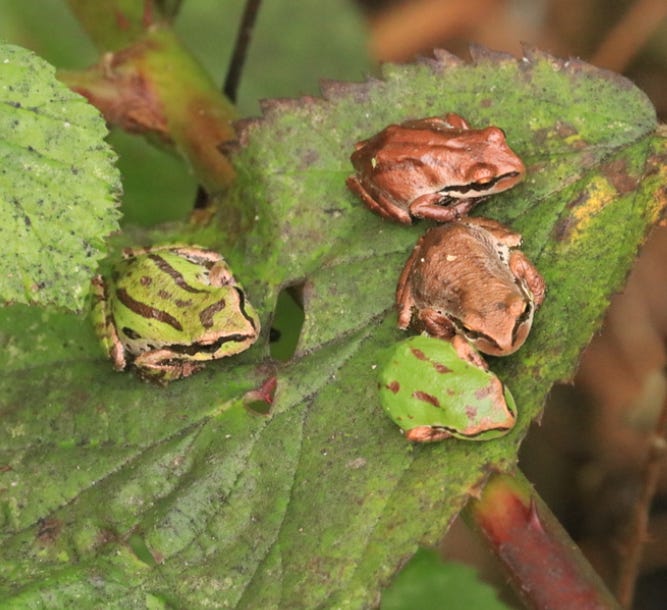
Pacific chorus frogs on a blackberry leaf. Photo by Zach Hawn on iNaturalist. I’m so impressed by the diversity of coloration and markings among chorus frogs. Check out all the wardrobes they don on this page of photo reports on iNaturalist.
In late winter and early spring, the air vibrates with the chorus of Pacific tree frogs, also known as Pacific chorus frogs. Males stake out territory with their two-part ‘Kreek-eeck’ calls. As male chorus frogs make advertisement calls, female frogs approach and select their mate. Eggs are carefully attached to submerged sticks or stones, anchored just long enough to complete their transformation. A single female chorus frog can lay 500 to 1,250 eggs in a year! This time of year, where I live now in the Sierra Nevada mountains of California, the sound of all those one-time eggs is evident and deafening each evening.
The biscuit-and-swale sagebrush-steppe in east-central Washington undulates between raised mounds of deep soil (biscuits) and shallow hardpan depressions (swale) that fill with water each spring. Here, you can watch for long-toed salamanders, fairy shrimp, freshwater clams, cattails, and sedges, and many other species uniquely adapted to a world that appears and disappears each year. They can be found throughout the Columbia Plateau with Turnbull National Wildlife Refuge being one place you can explore these fleeting wonders. The vernal pools at Cattle Point on San Juan Island host a variety of specialized, rare, and endangered plants adapted to the intense seasonal changes of being saturated in winter and dry all summer.
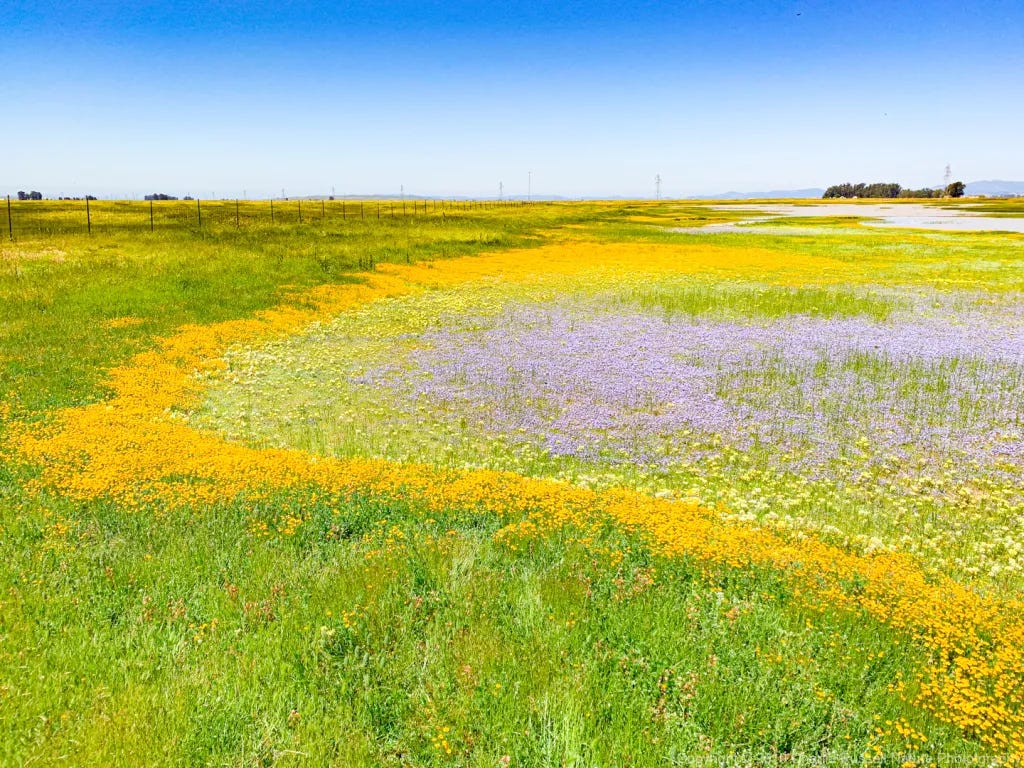
Image of wildflower fairy rings created by the unique landscape of vernal pools on California’s Jepson Prairie Preserve from the Vacaville Reporter.
A number of wildflower species have specialized in taking advantage of the shrinking pools, leaving their mark with a rainbow of colorful concentric rings of spring vibrance left in the wake of the evaporating pools. Some flowers thrive in the very shallow water, while others prefer it a bit deeper, and still others like to grow just at the edge of the pool. The result is a stunning display of efflorescence by the hand of nature’s paintbrush.
Small, temporary, and easy to overlook, vernal pools remind us that some of nature’s most important work happens quietly and only for a season. Vernal pools teach us that not everything meaningful is meant to last. Some things are powerful precisely because they are brief. They ask us to notice what appears quietly, to protect what is small, and to trust that even short-lived abundance can sustain an entire community.
Journal Prompts Inspired by Vernal Pools
What would it look like to trust that even a short season of abundance is enough?
Vernal pools remind us that not everything meaningful lasts. What has been temporary in your life that still shaped you in a lasting way?
Where in your life are you in a brief season that asks you to act, speak, or grow before it passes?
Project: Caring for Vernal Pools
Many vernal pools exist on private land (maybe yours?), and too many have been lost to development, altered landscapes, and prolonged drought. It is estimated that about 90% of the vernal pools in California and Southern Oregon have been lost to farmland and urban sprawl. Protecting existing pools, or intentionally creating one in your backyard, school, or community garden can make a meaningful difference. In fact, maintaining a vernal pool can count toward the water feature requirement for becoming a Certified Wildlife Habitat!
Honor natural depressions. Avoid filling low areas and allow pools to form and dry naturally. Because vernal pools dry out by summer, they do not provide suitable conditions for mosquitoes to complete their life cycle.
Leave nature in place. Standing trees, brush, fallen leaves, and dead logs provide food, shelter, and breeding opportunities for wildlife.
Don’t disturb the basin. Digging, dumping, or reshaping a pool can interfere with its ability to hold water and support life.
Protect the surrounding space. Maintain a natural buffer, ideally at least 100 feet around the pool, to preserve habitat, food sources, and safe movement corridors for its residents.
Curious to know how many living things can be sustained by vernal pools in the Pacific Northwest?
Here’s an abbreviated list of species you can expect to encounter according to Oregon’s Urban Rewilding Project (visit their website for all the dirt on adding a vernal pool to your backyard wildlife refuge):
Pacific tree frog (Pseudacris regilla) – A common and adaptable species, these frogs use vernal pools for breeding and lay eggs in the shallow waters.
Northwestern salamander (Ambystoma gracile) – A key vernal pool species, they rely on these wetlands for reproduction and larval development.
Long-toed salamander (Ambystoma macrodactylum) – This species breeds almost exclusively in fish-free water bodies like vernal pools.
Fairy shrimp (Branchinecta spp.) – These small crustaceans are specially adapted to the temporary waters of vernal pools, completing their life cycle before the pools dry up.
Tadpole Shrimp (Notostraca): Ancient,”living fossil” crustaceans with 30-35 pairs of legs, often found in California and Southern Oregon.
Western pond turtle (Actinemys marmorata) – While not solely dependent on vernal pools, these turtles use them as seasonal foraging grounds. (WPTs are listed as endangered in Washington state, sensitive in Oregon, and are undergoing federal review for protection under the Endangered Species Act.)
Plants:
Showy milkweed (Asclepias speciosa) – A vital nectar source for pollinators, especially monarch butterflies.
Common camas (Camassia quamash) – A striking blue-flowered plant that flourishes in vernal pool meadows and wet prairies.
Pacific willow (Salix lucida) – Grows along the edges of seasonal wetlands, stabilizing soil.
Salmonberry (Rubus spectabilis) – Provides food for birds and mammals in riparian areas.
Thimbleberry (Rubus parviflorus) – A dense shrub that supports pollinators and wildlife.
Sources and places to learn more:
https://wildlife.ca.gov/Conservation/Plants/Vernal-Pools
https://ecology.wa.gov/blog/july-2025/wetlands-through-the-seasons
https://www.urbanrewildingproject.com/post/vernal-pools-seasonal-oases-for-oregon-s-wildlife
https://www.mister-toad.com/PacificTreeFrog.html
https://www.vernalpool.org/
https://wdfw.wa.gov/sites/default/files/2020-05/amphibian__eggmass_lesson.pdf
https://www.methownaturenotes.com/damselflies-of-the-methow-valley/
Oh my gosh, the chorus frogs. Here in Minnesota it’s going to be a while yet before we start hearing them, but they’re coming. They are SO LOUD in our neighborhood, where we have a lot of ponds and little wetlands. They can be overwhelm, but I love the little buggers.